
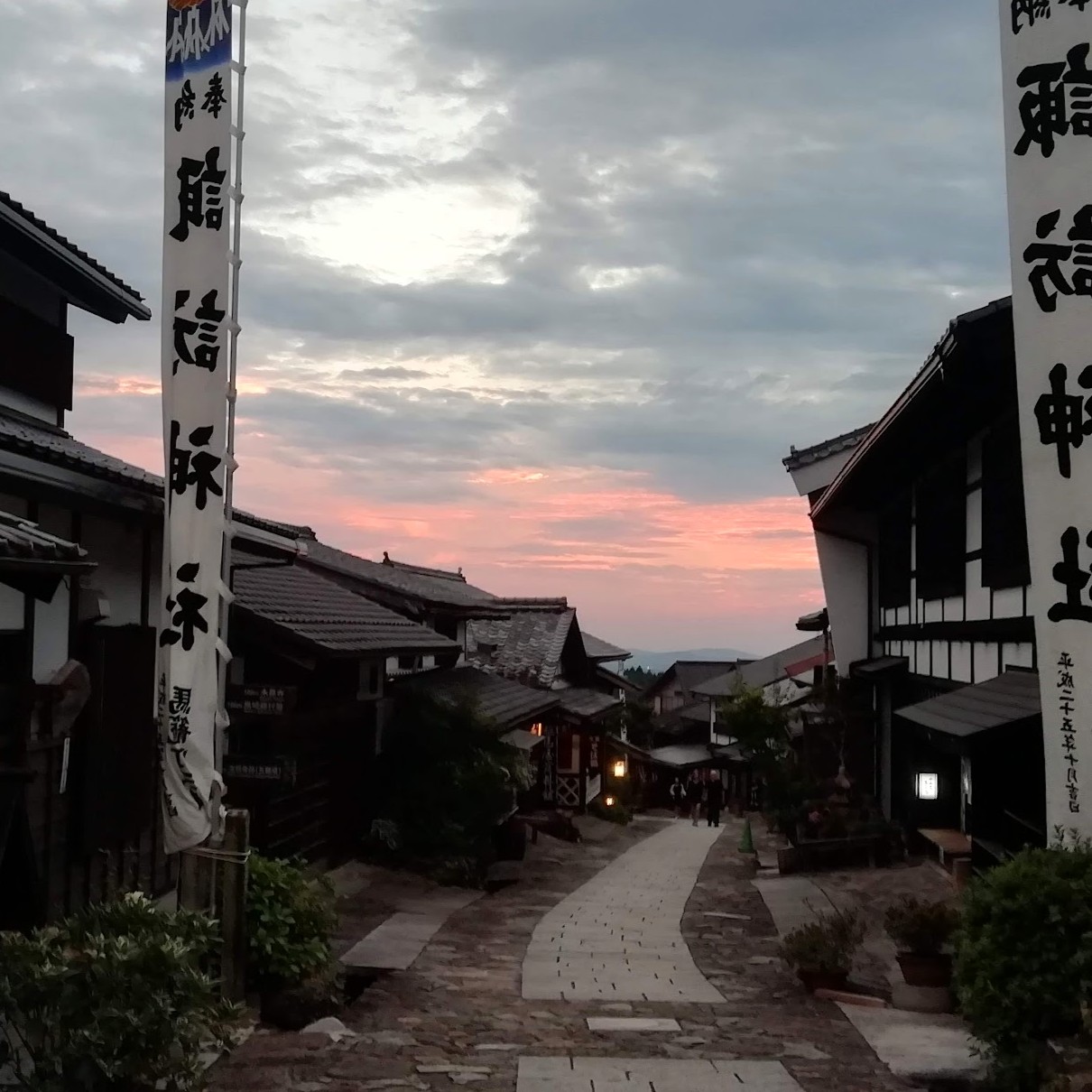
Recently I finally read Shimazaki Toson’s Before the Dawn (first published serially from 1929-1935). Set along the old Kiso Road (aka the Nakasendo), the historical novel follows the life of a village headman and the profound effects on him and his community when Japan’s feudal period gave way to the modern era in the mid-to-late 1800s. Much of the story takes place in the Nakasendo post town of Magome where Shimazaki hailed from. Magome was enough of a backwater that it escaped the worst of Japan’s post-WWII development, and today it’s a wonderfully preserved stop at the southern end of the Kiso Valley.
Having spent seven years living and leading tours in the Kiso District, I think one reason it took me so long to pick up this novel was its ubiquity. “The entire Kiso Road lies in the mountains” is the opening line, and you see it in local tourism materials ad nauseum. Reading it now, a couple of years out from living there, felt a bit nostalgic. I had to smile.
Shimazaki reportedly spent years researching the novel, and according to the forward by its translator William Naff, many in Japan consider Before the Dawn one of the most accurate depictions of life in that era. Reading such an intimate portrayal of areas I’d long been walking and introducing people to was a fun experience, and of course some of that color will work its way into my tours.

One takeaway for me was how closely the story of life along the Kiso Road I’d pieced together from living there was almost exactly as portrayed in Before the Dawn. In fact, now I wonder how much of modern local Kiso history is precisely the story of this novel. At the very least, its influence can’t be overstated.
There was just one thing in this novel though that completely took me by surprise. At one point, the main character makes a local pilgrimage.
“Otaki village was at the foot of Mt. Ontake, where the main shrine for the Kiso District was located.”
Now, Otaki is exactly where I lived for seven years. Ontake Satomiya Shrine was practically our backyard—my morning walks often brought me there, and even now Mindful Japan pilgrimage trail walking tours set off from Satomiya Shrine.
Since the first time I visited, I knew Satomiya Shrine was someplace special. Shimazaki knew this too; at the end of his pilgrimage, the main character even says, “I had never imagined there was such an enchanted land here in Kiso.”
But never once in my years in the village did I hear mentioned that this used to be the main shrine for the Kiso District.

Anthropologist Eric Cunningham did extensive fieldwork in Otaki in the years before I arrived, and the village frequently appears in his wonderful Spirit/Matter Substack. Just recently I was reading an article where he tells of a village program where an elder (I believe a senior bureaucrat) laments the failure of the older generation to properly pass along local history and tradition. Unfortunately, this is an all too common situation in rural Japan, and is absolutely a part of what’s happened here.
It’s simply not possible though that the villagers would never mention the shrine’s former status, especially as the village tourist association works to get themselves noticed, and extra especially given the somewhat rival-like relationship they have with neighboring Kiso Town. This type of info would usually be among the first things that people would divulge, and any time they had the chance.

And then it occurred to me…I think villagers in Otaki just don’t know. While the Shimazaki novel has become the story of the Kiso Valley, for the people of Otaki, an important piece of their history seems to have slipped through the cracks. Next time I’m in the village, I’ll do some more poking around and let you know.